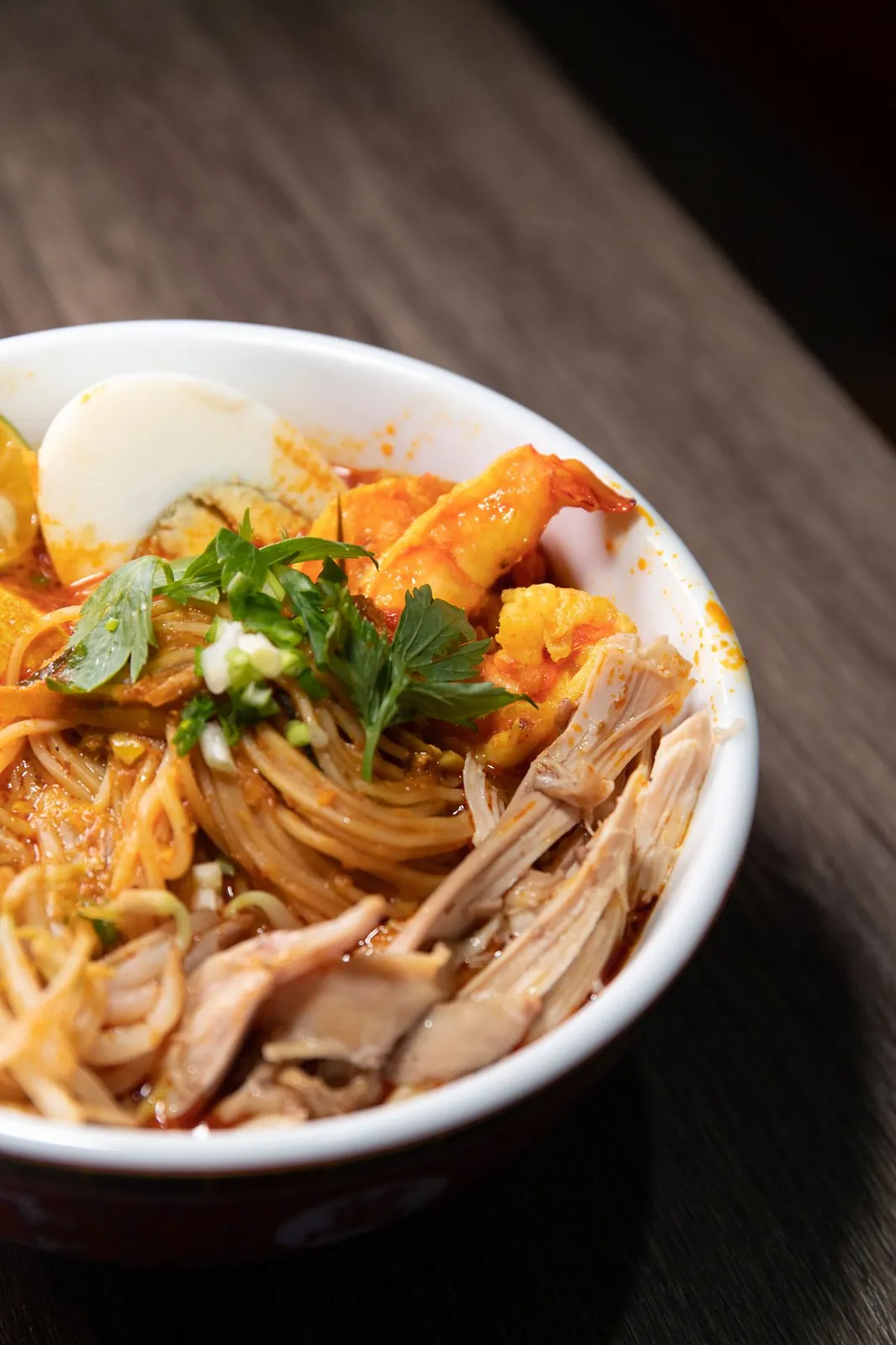
Nyonya, also called Peranakan, cuisine grew out of centuries of intermarriage between early Chinese settlers and local Malay communities across the Malay Peninsula and Indonesian Archipelago. It blends Chinese ingredients and cooking techniques with Malay spices and methods, and later picked up traces of Portuguese, Dutch and British influence from the colonial powers that passed through the region. The result is a distinct cuisine with its own dishes, not simply Chinese food cooked with Malay spices.
What does "Nyonya" or "Peranakan" actually mean?
Peranakan refers to the descendants of these early mixed Chinese and Malay communities, while Nyonya specifically describes the women of that community and, by extension, the cuisine they are most associated with. The cuisine is literally named after its cooks. Babies, or Baba, is the male equivalent term for the men of the same community, which is why you will sometimes see the cuisine referred to as Baba Nyonya food rather than Nyonya alone.
Where does the cuisine come from historically?
Sources place the starting point of this intermarriage at different points, with some tracing Chinese sailors arriving in the Malay Archipelago from the 13th century onward, and others pointing more specifically to the 15th century spice trade era as when marriages between Chinese traders and local communities became common. Either way, the cuisine had centuries to develop before European colonial powers, including the Portuguese, Dutch and British, added their own influence on top of the existing Chinese and Malay base. That layering is part of why Nyonya food reads as more complex than either of its two main source cuisines on their own.
What makes Nyonya cooking different from other styles?
Nyonya cooking takes Chinese ingredients and techniques, such as the use of certain noodles, soy-based seasonings and stir-frying, and combines them with Malay and Indonesian spice pastes, coconut milk and sour, fragrant ingredients like tamarind and lemongrass. The result sits between the two traditions rather than resembling either one closely. It is also a cuisine built heavily around spice pastes made fresh by hand, which is part of why traditional Nyonya cooking has a reputation for being labour-intensive compared to faster, single-tradition dishes.
What are the dishes to know, starting with Nyonya laksa?
Laksa is the dish most people encounter first, and it comes in two quite different forms depending on the region. Asam laksa, associated with Penang, is a sour, tamarind-based noodle soup with a fish broth, while laksa lemak, more common in Singapore and the southern Malay Peninsula including Malacca, is a richer, coconut milk-based soup. Beyond laksa, otak-otak is a steamed fish cake wrapped in banana leaf, made from ground fish mixed with lemongrass, chilli and turmeric. Inchi kabin is a well-known fried chicken dish served with a dipping sauce built around Worcestershire sauce, an example of the colonial-era influence working its way into a core dish. Kuah lada is a peppery, tamarind and turmeric-based fish dish traditionally made with golden snapper, simmered with black peppercorns. If you want to see how these dishes sit alongside broader Malaysian cooking, our guide to Malaysian food in Melbourne covers the wider cuisine that Nyonya food overlaps with.
| Dish | Style | Key ingredients |
|---|---|---|
| Asam laksa | Sour noodle soup (Penang) | Tamarind, fish, noodles |
| Laksa lemak | Rich noodle soup (Singapore, Malacca) | Coconut milk, noodles, spice paste |
| Otak-otak | Steamed fish cake | Ground fish, lemongrass, chilli, turmeric |
| Inchi kabin | Fried chicken with dip | Spiced chicken, Worcestershire-based sauce |
| Kuah lada | Peppery fish dish | Golden snapper, tamarind, turmeric, peppercorns |
Why does the region change the flavour so much?
Nyonya cooking is not uniform across the region, and the differences follow geography. Penang's version, in the north of the Malay Peninsula, tends to carry more Thai influence, leaning on tamarind and other sour ingredients more heavily. Singapore and Malacca's versions, further south, lean more toward Indonesian influence, with coconut milk appearing more often across the menu. If you have tried Nyonya food in one city and it tasted quite different somewhere else, this regional split is usually why.
How was the cuisine traditionally passed down?
Nyonya cooking was historically taught at home, with young women in Peranakan households learning recipes directly from their mothers and grandmothers rather than from written records. Wealthier families sometimes went further and hired a Bibik, an experienced cook brought in specifically to teach the daughters of the household, which is part of why so many Nyonya recipes exist in slightly different versions depending on which family or region they came from. If you want to build out your own vocabulary for Malaysian and Nyonya menu terms, our guide to reading a Malaysian menu covers the ingredient names and spice terms that come up most often.
A short checklist if you are trying Nyonya food for the first time:
- Ask whether the laksa on offer is the sour Penang style or the coconut-based Singapore and Malacca style, since the two are very different dishes.
- If you are sensitive to sourness, ease in with laksa lemak or inchi kabin before trying asam laksa or kuah lada.
- Ask what is in the spice paste if you have allergies, since Nyonya pastes often combine many ingredients at once.
- If a restaurant offers a set Nyonya banquet, ask whether it includes at least one dish from each of the main categories, soup, fried, and steamed, rather than three versions of the same style.
For a broader sense of how these dishes slot into a shared table order, our guide to Southeast Asian dishes worth ordering is a useful companion to this one.