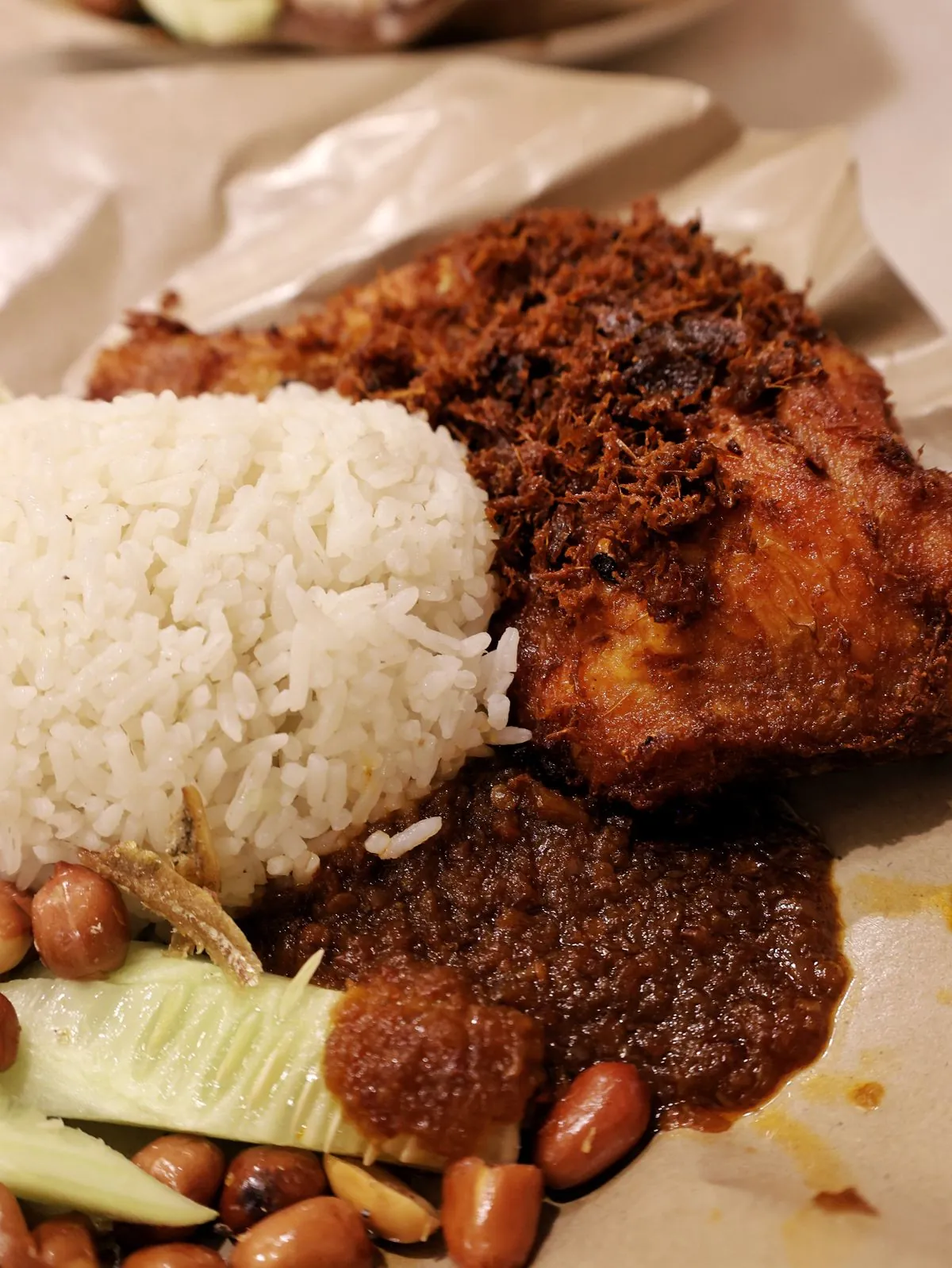
Malaysian food in Melbourne covers a short list of dishes you will keep seeing on menus: laksa, nasi lemak, roti canai, satay and rendang. You can find them from Chinatown food courts to suburban strip shops in the inner north and east, and the style varies more than the dish names suggest, since Malaysian cooking itself blends Malay, Chinese and Indian traditions. Knowing what each dish is meant to taste like makes it much easier to tell a good plate from a rushed one.
What Malaysian dishes should you actually look for in Melbourne?
A handful of dishes turn up across almost every Malaysian menu in the city. Nasi lemak is coconut rice served with sambal, fried anchovies, peanuts, egg and often fried chicken, built as a balanced plate rather than a single flavour. Laksa is a noodle soup that splits into two very different styles: curry laksa, built on a coconut and spice broth, and asam laksa, a sour, fish-based broth from Penang that tastes nothing like the coconut version despite sharing a name. Satay is skewered, grilled meat served with a peanut sauce, usually ordered as a starter or shared snack rather than a main. Rendang is a slow-cooked, dry curry, traditionally beef, where the sauce reduces down until it clings to the meat instead of pooling in the bowl. If you want a fuller rundown of how these dishes fit into a shared meal, our guide to Southeast Asian dishes worth ordering breaks down flavours and serving styles in more detail.
Where in Melbourne can you find Malaysian food?
According to local dining guides, Malaysian food in Melbourne clusters in a few recognisable pockets. The CBD and Chinatown area carries laksa and nasi lemak specialists serving large bowls to a lunchtime crowd, while Carlton has long had nasi lemak as a late-night staple near the university. Footscray and Maribyrnong carry roti-focused menus alongside the area's broader Southeast Asian food scene, and pockets of Melbourne's east, including Wantirna South, hold suburban Malaysian restaurants known for rendang and curries rather than quick noodle dishes. If you are specifically looking at Richmond, our guide to Richmond's dining strips covers which streets lean toward which cuisines, including where Southeast Asian food sits alongside Vietnamese and modern Australian options.
How spicy is Malaysian food, really?
Spice level in Malaysian cooking depends far more on the dish and the kitchen than on any single rule. Sambal, the chilli paste that turns up next to nasi lemak and inside many sauces, can range from a background warmth to a genuinely sharp heat depending on how it is made. Asam laksa tends to read as sour and fragrant before it reads as hot, while curry laksa carries heat more evenly through the coconut broth. Rendang and satay sauce are generally the gentlest entry points if you are cautious about spice, since both rely more on depth of flavour than raw chilli.
| Dish | Typical spice level | Flavour profile | Good entry point if... |
|---|---|---|---|
| Nasi lemak | Mild to medium | Coconut, savoury, balanced | You want one plate that covers several flavours |
| Curry laksa | Medium | Coconut, spiced, rich | You like Thai curry or coconut-based soups |
| Asam laksa | Low heat, high sourness | Tamarind, fish, fragrant | You prefer sour and savoury over hot |
| Satay | Mild | Grilled, peanut, sweet-savoury | You are easing into the cuisine |
| Rendang | Medium, slow-building | Deep, spiced, dry curry | You like flavour that builds over the meal |
What's the difference between nasi lemak, laksa and rendang?
The simplest way to keep these straight is by format rather than ingredient. Nasi lemak is a composed rice plate, laksa is a noodle soup, and rendang is a curry meant to be eaten with rice or bread rather than on its own. They are not competing dishes, they are different parts of a meal, which is why Malaysian menus often let you order all three across a table and share.
Can you get good Malaysian food outside the CBD?
Yes, and in some cases the suburban spots are the more consistent option. Dining guides repeatedly point to suburban Malaysian restaurants, particularly in the eastern suburbs, as places where rendang and curries get more kitchen attention than at fast CBD lunch counters built around quick laksa turnover. If you are willing to travel slightly further out, you often trade queue time for a more considered plate.
What should you ask before ordering a Malaysian banquet or set menu?
Banquet and set menu formats are common at Malaysian restaurants that want the table to share rather than order individually.
- Ask whether the set menu is fixed or whether you can swap one or two dishes.
- Check how the kitchen handles halal requirements, since Malaysian food draws on Malay, Chinese and Indian traditions that are not uniformly halal.
- Ask which dish on the set menu is the spiciest, rather than assuming based on the dish name alone.
- Confirm whether rice is included or charged separately, since some set menus price it apart from the mains.
- If sharing a table of six or more, ask whether the kitchen staggers dishes or sends everything at once.
Malaysian cooking also overlaps closely with Nyonya, or Peranakan, cuisine, which blends Chinese and Malay techniques into its own distinct set of dishes. Our guide to Nyonya and Peranakan cuisine is worth reading alongside this one if you want to understand where the two traditions meet and where they diverge.